Asparagus and Goat Cheese Fettuccine
Highlighted under: Light & Fresh
I love making Asparagus and Goat Cheese Fettuccine because it perfectly combines the earthy flavor of fresh asparagus with the creamy tang of goat cheese. The process is quick and straightforward, making it an ideal weeknight meal that feels special. Every time I whip this up, I'm reminded of the first time I tried it at a cozy Italian restaurant. It was a dish that made my taste buds dance, and now I can recreate that joy in my own kitchen with just a handful of ingredients. The results are consistently delightful!
When I first decided to experiment with pasta dishes, the combination of asparagus and goat cheese was an unexpected revelation. The creaminess of the goat cheese pairs beautifully with the crisp-tender asparagus, creating a luxurious yet light meal. I remember the first time I added a hint of lemon zest, and it elevated the entire dish, giving it a refreshing brightness that made it unforgettable.
One of my favorite tips for this recipe is to reserve some pasta cooking water. Adding a splash of this starchy water will help create a silky sauce that clings beautifully to the fettuccine. This technique not only enhances the texture but also ensures every bite is packed with flavor!
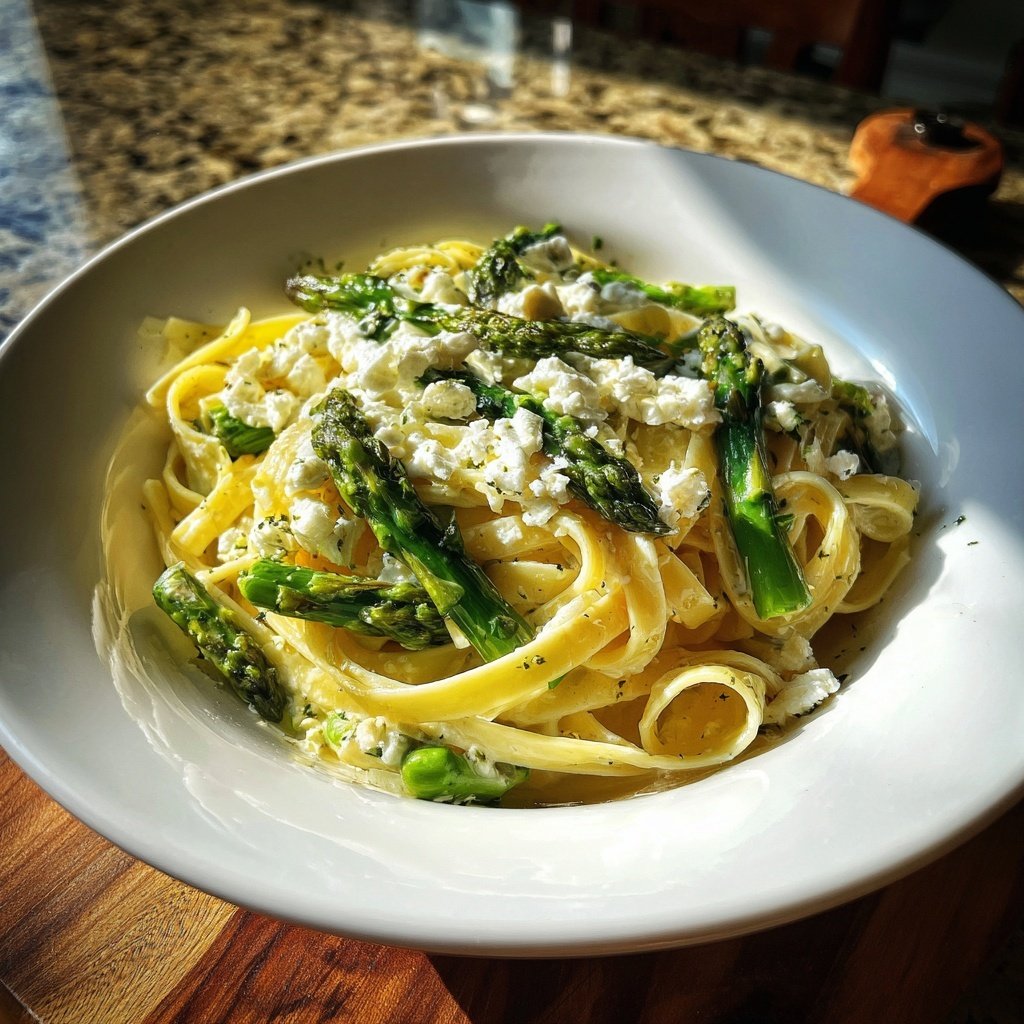
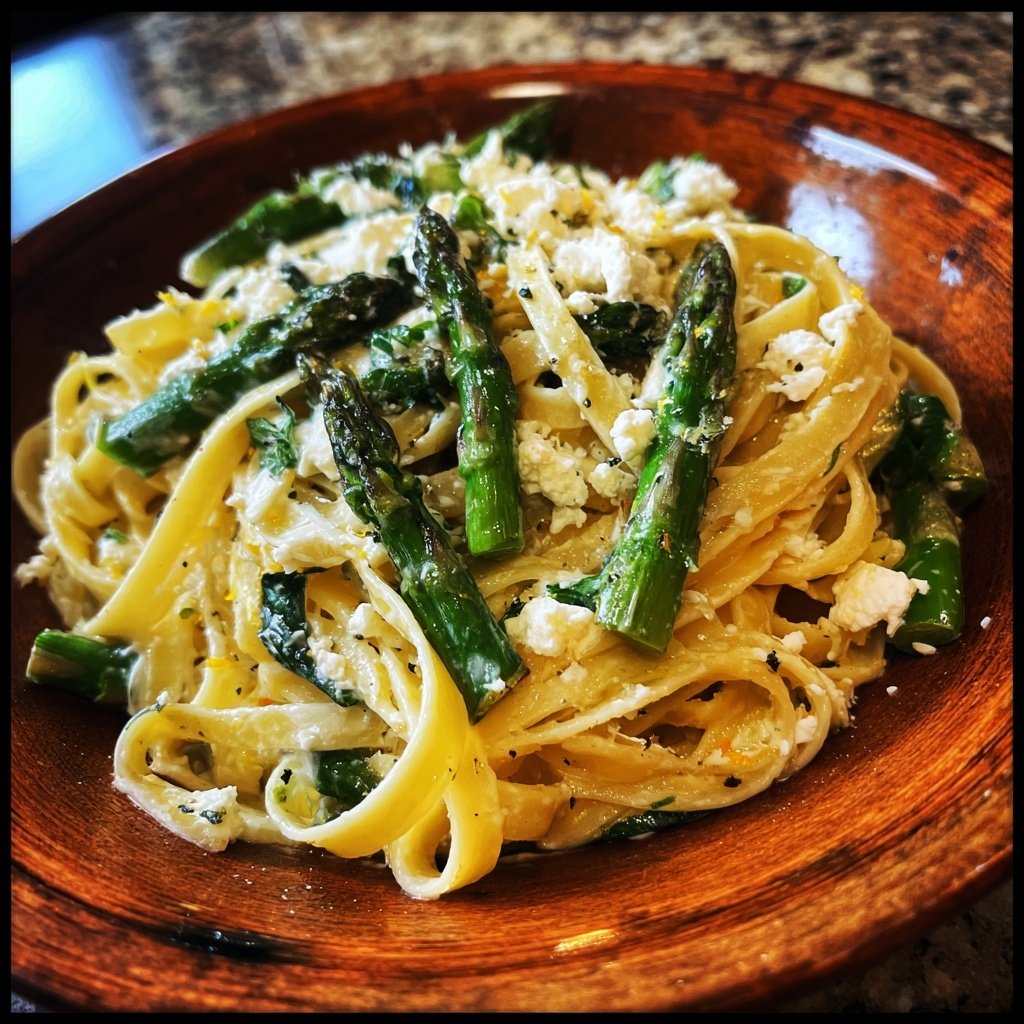
Why You'll Love This Recipe
- Rich goat cheese flavor balanced with fresh asparagus
- Quick preparation, perfect for busy weeknights
- Creamy sauce that envelops the fettuccine wonderfully
The Role of Asparagus in the Dish
Asparagus plays a crucial role in this fettuccine, adding not only flavor but also a delightful crunch that contrasts with the creaminess of the goat cheese. When selecting asparagus, look for firm, vibrant green stalks with tightly closed tips. This ensures you're using the freshest produce, which contributes to both taste and texture. Remember, if the asparagus is old, it can become tough and woody, detracting from your dish's overall enjoyment.
To get the best out of the asparagus, sauté it until it turns a vibrant green and is tender yet crisp, about 5-7 minutes. This timeframe allows it to maintain its nutritional value while also helping it soak up the flavors from the garlic and olive oil. You want to avoid overcooking the asparagus, as it can lose its snap and become mushy, changing the intended character of the dish.
Perfecting the Creamy Goat Cheese Sauce
The goat cheese is key to achieving the creamy texture that envelops the fettuccine beautifully. When you mix it with the reserved pasta water, it transforms into a lush sauce that clings to the noodles. My tip for achieving the best outcome is to use room temperature goat cheese. If it's too cold, it won’t melt smoothly into the sauce, resulting in clumps instead of a creamy consistency.
Incorporating lemon zest into the sauce not only enhances its freshness but balances the richness of the goat cheese. Be sure to add just enough reserved pasta water; this will help loosen the mixture without making it too watery. Aim for a glossy coating on the pasta, indicating that the sauce is well-combined. If you find the sauce too thick, a splash more of pasta water will help you achieve the right texture.
Ingredients
Ingredients
Main Ingredients
- 12 ounces fettuccine pasta
- 1 lb fresh asparagus, trimmed and cut into 2-inch pieces
- 1 cup crumbled goat cheese
- 3 tablespoons olive oil
- 2 cloves garlic, minced
- Zest of 1 lemon
- Salt and pepper to taste
Instructions
Instructions
Steps to Prepare
Cook the Fettuccine
In a large pot, bring salted water to a boil. Add the fettuccine and cook according to package instructions until al dente. Reserve 1 cup of pasta cooking water, then drain the rest and set aside.
Sauté the Asparagus
In a large skillet, heat the olive oil over medium heat. Add the garlic and asparagus, sautéing for about 5-7 minutes until the asparagus is tender but still crisp.
Combine Ingredients
Lower the heat and add the cooked fettuccine to the skillet with the asparagus. Mix in the goat cheese, lemon zest, and enough reserved pasta water to create a creamy sauce. Stir well to combine.
Season and Serve
Season with salt and pepper to taste. Serve immediately, garnished with additional goat cheese if desired.
Enjoy Your Meal!
Pro Tips
- For extra flavor, try adding a handful of fresh herbs like basil or parsley right before serving. They add a wonderful freshness that complements the dish beautifully.
Make-Ahead and Storage Tips
This dish is best enjoyed fresh, but you can prepare certain components ahead of time. Cook the fettuccine and sauté the asparagus earlier in the day, then assemble the dish just before serving. If you've made the entire dish and have leftovers, store them in an airtight container in the fridge for up to two days. When reheating, do so gently on the stovetop with a splash of olive oil or water to revive the sauce’s creaminess.
If you're considering freezing the fettuccine, try to do so before adding the goat cheese. The cheese may not reheat well from frozen. Instead, freeze the pasta and asparagus separately and then add the cheese during the final reheating process. This approach helps preserve the delightful creaminess of the goat cheese, ensuring that you get the best texture and flavor possible.
Ingredient Variations
While asparagus is a standout choice here, consider swapping in seasonal vegetables like zucchini or spinach when they're available. Both add their unique flavors while offering similar textures. If you prefer a different cheese, ricotta can be a suitable substitute for goat cheese, bringing a milder flavor and creamy texture. Just bear in mind that ricotta won’t have the tanginess that goat cheese provides, so you may want to incorporate some fresh herbs for an added flavor boost.
If you're looking to lighten the dish, you can decrease the amount of olive oil or substitute it with a cooking spray. Moreover, using whole wheat fettuccine instead of traditional pasta can also provide a welcome boost of fiber, making the dish a bit more health-conscious while still retaining its deliciousness.
Questions About Recipes
→ Can I use frozen asparagus?
Yes, but fresh asparagus will provide a better texture and flavor. If using frozen, be sure to thaw and drain any excess water.
→ What other cheeses can I substitute for goat cheese?
You can try feta cheese or ricotta as alternatives, but the flavor will vary slightly.
→ Can I make this dish ahead of time?
It's best served fresh, but you can prepare the components ahead of time and combine them just before serving.
→ Is this dish suitable for vegetarians?
Yes, it's fully vegetarian and packed with wholesome ingredients!
Asparagus and Goat Cheese Fettuccine
Created by: The Simplecooktips Team
Recipe Type: Light & Fresh
Skill Level: Intermediate
Final Quantity: 4 servings
What You'll Need
Main Ingredients
- 12 ounces fettuccine pasta
- 1 lb fresh asparagus, trimmed and cut into 2-inch pieces
- 1 cup crumbled goat cheese
- 3 tablespoons olive oil
- 2 cloves garlic, minced
- Zest of 1 lemon
- Salt and pepper to taste
How-To Steps
In a large pot, bring salted water to a boil. Add the fettuccine and cook according to package instructions until al dente. Reserve 1 cup of pasta cooking water, then drain the rest and set aside.
In a large skillet, heat the olive oil over medium heat. Add the garlic and asparagus, sautéing for about 5-7 minutes until the asparagus is tender but still crisp.
Lower the heat and add the cooked fettuccine to the skillet with the asparagus. Mix in the goat cheese, lemon zest, and enough reserved pasta water to create a creamy sauce. Stir well to combine.
Season with salt and pepper to taste. Serve immediately, garnished with additional goat cheese if desired.
Extra Tips
- For extra flavor, try adding a handful of fresh herbs like basil or parsley right before serving. They add a wonderful freshness that complements the dish beautifully.
Nutritional Breakdown (Per Serving)
- Calories: 480 kcal
- Total Fat: 21g
- Saturated Fat: 9g
- Cholesterol: 30mg
- Sodium: 220mg
- Total Carbohydrates: 60g
- Dietary Fiber: 3g
- Sugars: 3g
- Protein: 12g